

The green half: Phú Quốc National Park
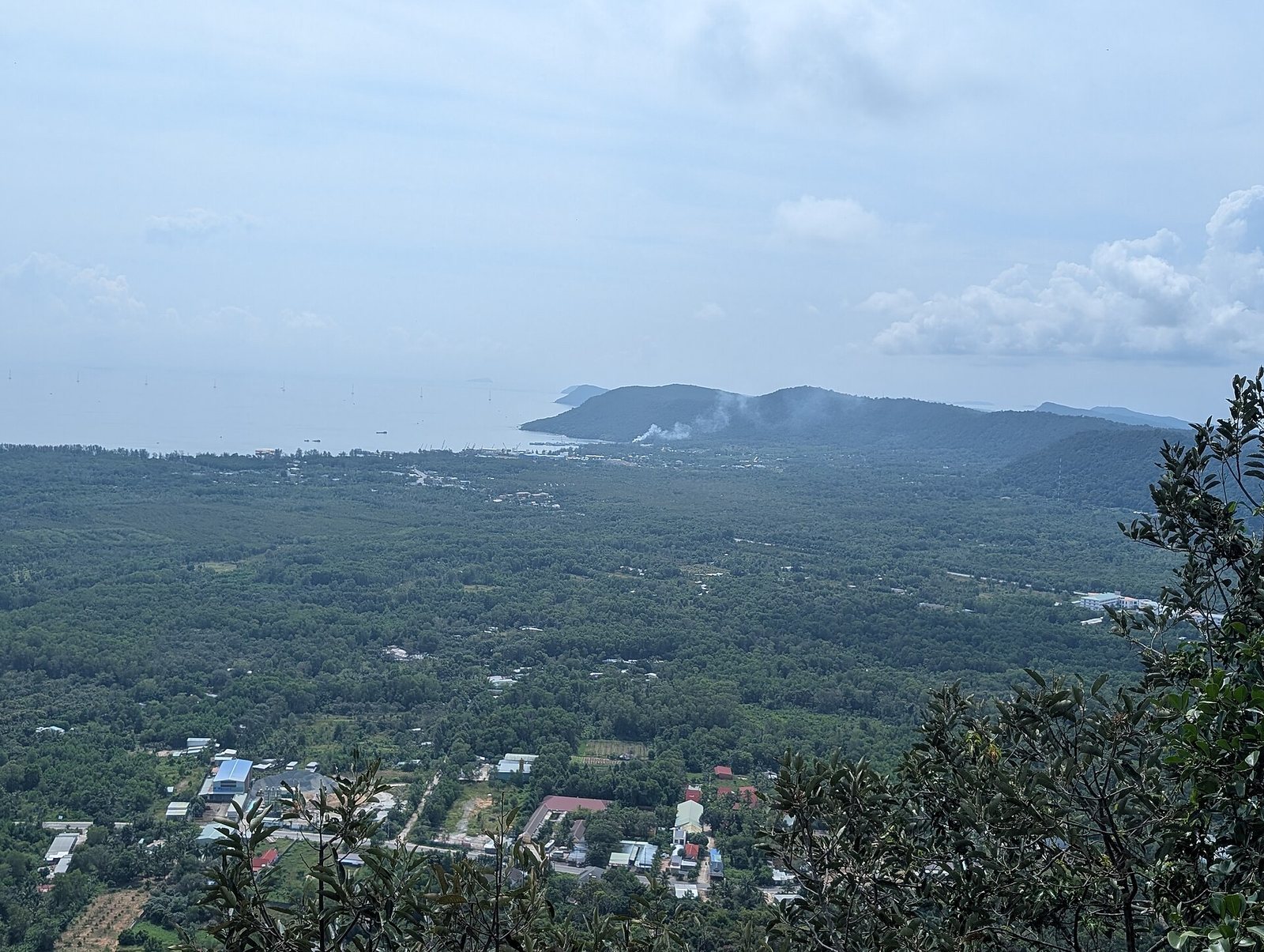
Forested hills running down to the sea, northern Phu Quoc. Photo: Elmschrat / Wikimedia Commons (CC0)
It is easy to spend a week on Phu Quoc and only see the coast. But the island is around 50 kilometres long, and well over half of it — most of the north and the mountainous spine — is Vườn quốc gia Phú Quốc, part of a UNESCO-recognised biosphere reserve. Standing on the beach you are looking at the edge of a fairly serious piece of forest.
What is in there
Evergreen tropical forest over a ridge of low mountains, with streams running off it, plus mangrove and melaleuca at the edges. There are hornbills, macaques, slow loris and a long list of birds. The forest is also where the island's pepper and its wild rose myrtle come from.
Seeing some of it, realistically
- The streams. Suối Tranh and Suối Đá Bàn are the two accessible waterfalls, with short walks in from the road. Both need rain to be worth it — visit toward the end of, or just after, the wet season rather than in March.
- The north road. Driving north toward Gành Dầu takes you through forest for long stretches, and it is the easiest way to get a sense of the scale.
- Rạch Vẹm. On the north coast, this shallow bay is known for the starfish in its shallows. Tread carefully and leave them in the water.
Practical notes
- Interior roads are quiet but the surface varies. Take care on a scooter, and do not ride after dark.
- Waterfalls are seasonal. In the dry months they can be barely a trickle.
- Cover up and take repellent — it is real forest.
- Take your rubbish back out with you.
Latest posts
Explore the World through Informative Articles and Personal Stories